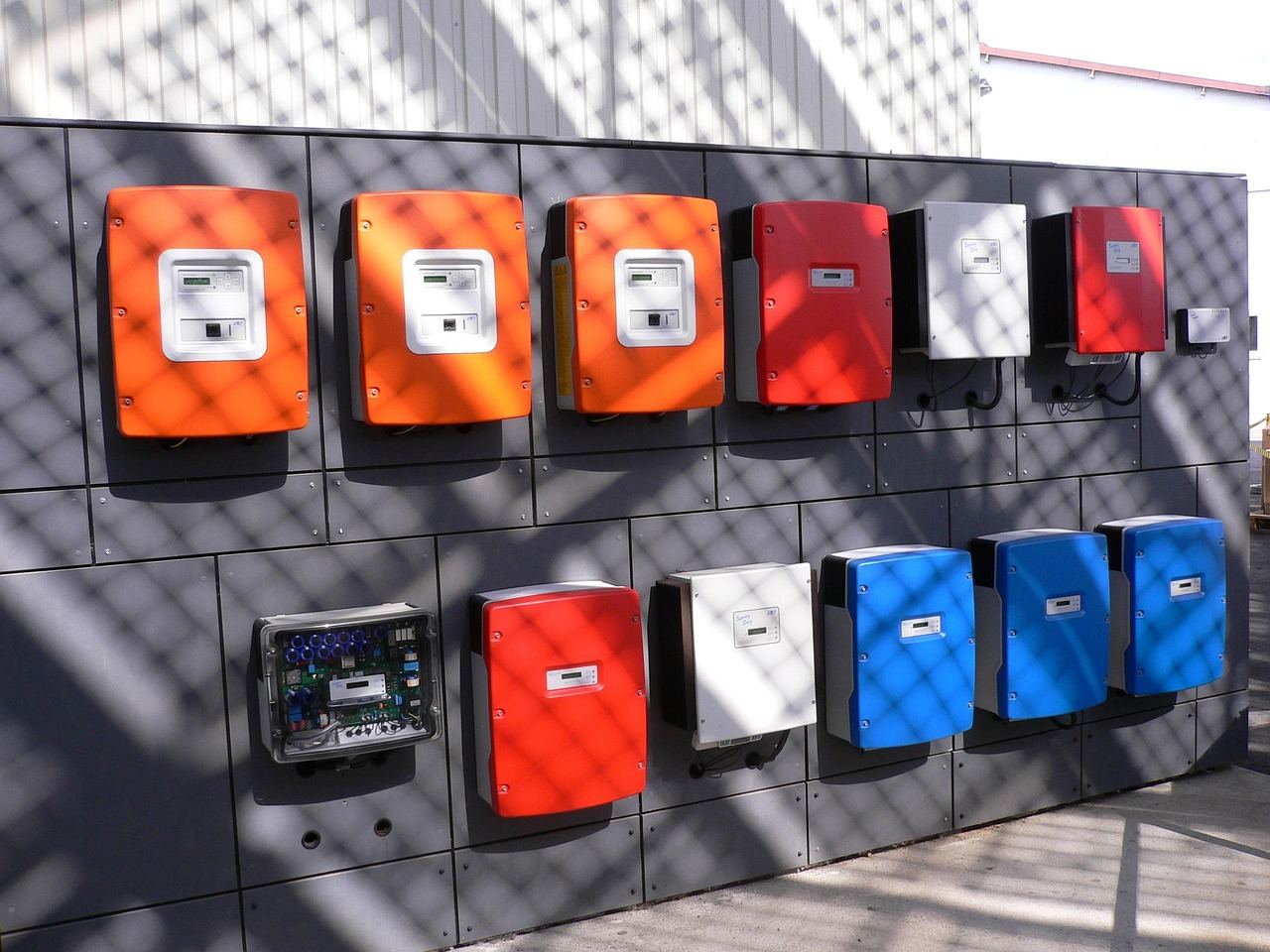
Solar inverter maintenance is the routine inspection, cleaning, testing and repair of a plant’s power electronics. It matters because inverter faults stop whole strings or whole plants.
It is a central element of solar O&M services. This page lists what an inverter contains, why it fails, which checks are routine and how to respond to repeated trips.
| Item | What to know |
|---|---|
| Inverter share of failures | One study: 76% of 196 observed failures were at the inverter. |
| One failing block | If one block fails, the whole inverter fails. |
| Cooling fans | Fans aim to cool power devices on heat sinks efficiently. |
| Filters, fans, batteries | Filters yearly, fans roughly five-year cycle, batteries around three-yearly. |
| Switchgear protection checks | Medium-voltage checks about every five years, aligned to the grid code. |
Figures come from the IMEKO inverter reliability paper and the SgurrEnergy guide. This information can change, so check the sources for current details.
Why inverters need attention
Modules have no moving parts, but inverters combine heat, switching electronics and cooling hardware. Reliability studies repeatedly find them at the centre of plant outages. A conference paper on inverter reliability cites a Sandia National Laboratories study of PV systems showing that, in its words, 76% of the 196 observed failures occur by the PV inverter. The figure comes from one sample of systems and will differ between plants, but the direction is consistent with what operators report.
The impact of a failure also depends on the design. A string inverter that stops removes a small block of capacity, while a central inverter that stops removes a large one. Whatever the architecture, the lost energy grows every day the unit stays down, which is why maintenance plans pay close attention to inverters, spare parts and response times.
What is inside and what fails
The same paper describes the parts of a typical three-phase inverter: IGBT power modules, cooling fans, control software and DC link capacitors implemented on a printed circuit board, in addition to AC and DC contactors. Because the inverter cannot function without any of these blocks, the failure of one of them means the failure of the whole unit.
Each block has its own typical weakness:
- Power modules: thermal cycling stresses the connections inside the switching devices, so heat is the main enemy.
- DC link capacitors: they smooth the voltage, and their ageing is driven by temperature and ripple current.
- Cooling fans: their purpose is to cool the power devices on heat sinks, and they wear out mechanically and clog with dust.
- Contactors and relays: they connect and disconnect the unit every day, so contact wear is a matter of time.
- Circuit boards and control software: faults can be intermittent and may need firmware updates or board replacement.
External stresses add to these internal ones. For hot climates, the IEA PVPS guidelines point out that adequate ventilation during hot months is crucial for good operating conditions of inverters, as set out in the guidelines summary. In flood-prone regions the same document warns that submerged inverters can also short circuit and cause burn and fire risks.
Routine inverter maintenance tasks
Most preventive work targets heat and dust. The SgurrEnergy best practice guide lists indicative frequencies including inverter filter cleaning or replacement yearly, with fans on a roughly five-year cycle and internal batteries around three-yearly, and medium-voltage switchgear protection checks about every five years, aligned to the grid code, as set out in its guide. Manufacturer manuals take precedence, and a warranty may require specific intervals.
A typical visit also includes:
- Visual inspection for dust, moisture, insects, corrosion and discolouration from overheating.
- Checking the tightness of power connections and reviewing thermal images for hot spots.
- Testing fans, clearing air paths and replacing filters.
- Reviewing the event log for recurring warnings that did not trigger an alarm.
- Verifying protection settings, grid code parameters and firmware versions against the plant records.
Because opening an inverter exposes high voltage, this work needs trained staff, isolation procedures and the right protective equipment. Doing it at night or in low light, when the plant is not producing, also limits energy lost to the shutdown.
Responding to trips and faults
A tripped inverter is a symptom, not a diagnosis. The US Federal Energy Management Program gives a clear rule: conduct electrical inspections after inverter nuisance tripping, and when the system trips off, check for ground faults. The guidance adds that operators should not just turn the system off and on, as this will likely not address the root problem.
Frequent trips have several possible causes. Ground faults, insulation resistance that has fallen after rain, voltage rises on a weak grid connection, overheating and failing components all produce similar messages. The log, the weather record and the string data narrow the list. In some cases the grid operator, not the inverter, has limited the output, which is a different issue from a fault and is explained in the page on solar curtailment.
Ground faults sometimes trace back to degraded modules, and one well-known mechanism that interacts with grounding and string voltage is described in the page on potential induced degradation. Inverter and module diagnostics therefore often go together.
Using data to maintain inverters
Inverters report a great deal about their own condition. Internal temperatures, fan states, DC input voltages, AC output, event codes and efficiency can all be read remotely, and a review of those values often shows a problem before it becomes a trip. A temperature that creeps up on the same load, a fan that runs at full speed more often than before, or an efficiency that drifts down over a season are all signals that justify a visit.
Comparing units is as useful as watching one. Inverters of the same model on the same site should behave similarly, so an outlier in temperature, availability or energy yield points to a local cause such as a blocked filter, a loose connection or a failing fan. The comparison works best with consistent, high-quality monitoring data and with a log of past interventions, so that a repeat fault on the same unit is recognised as a pattern.
Firmware deserves a place in the plan too. Manufacturers release updates that correct bugs, change grid-support behaviour and improve protection, and an unmanaged fleet can end up with several versions that behave differently. Updating should be done on a controlled schedule, with a rollback option, after checking that the new version still meets the grid code and the plant’s permit.
Spares, warranties and replacement
Inverter downtime is dominated by waiting, so spare parts policy matters as much as repair skills. Fans, fuses, filters, surge protection and communication modules are common spares. The IEA PVPS summary recommends that plant owners set aside maintenance reserve accounts in corrective maintenance and spare parts action plans to foresee possible replacement costs, since a mid-life inverter replacement is a planned expense in most financial models.
Warranty terms should be read before work begins. Unauthorised repairs can void cover, and a failed component may qualify for a replacement under a manufacturer’s terms or an extended service agreement. Keeping logs of faults, interventions and replaced parts strengthens any claim, and the asset manager should hold those records.
Frequently asked questions
How often should a solar inverter be serviced?
Show answer
It depends on the model and the manufacturer’s manual. One published guide lists filter cleaning or replacement yearly, and fan replacement on a roughly five-year cycle.
What fails most often in an inverter?
Show answer
Typical weak points are power modules, DC link capacitors, cooling fans, contactors and circuit boards, with heat as the main stress.
What should be done after repeated inverter trips?
Show answer
Carry out an electrical inspection and look for ground faults instead of simply restarting the unit, because a restart will likely not address the root problem.
Can inverter faults be mistaken for curtailment?
Show answer
Yes. Reduced output can result from a grid operator’s limit as well as from a fault, so the logs and the grid signals need to be checked.