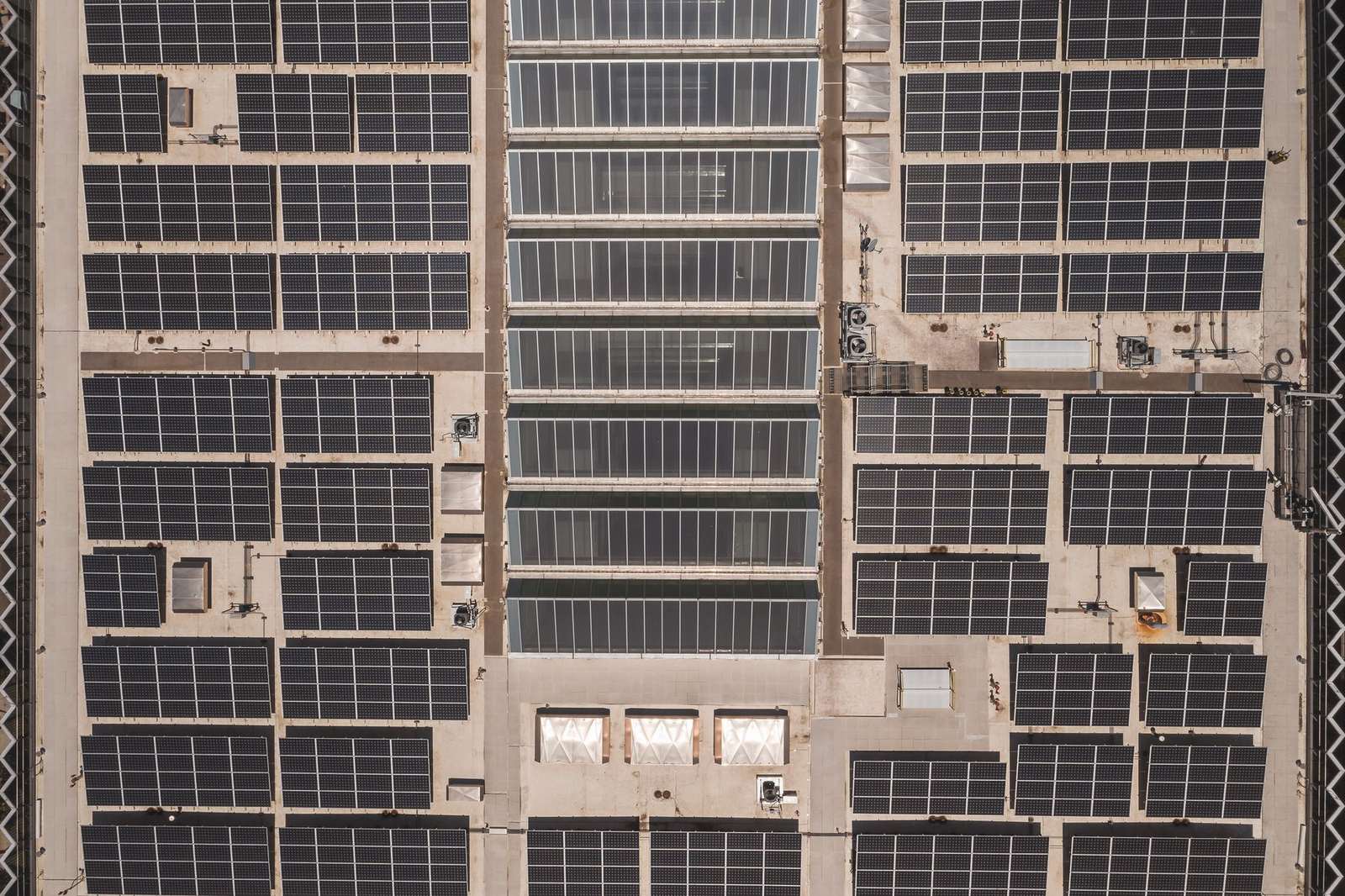
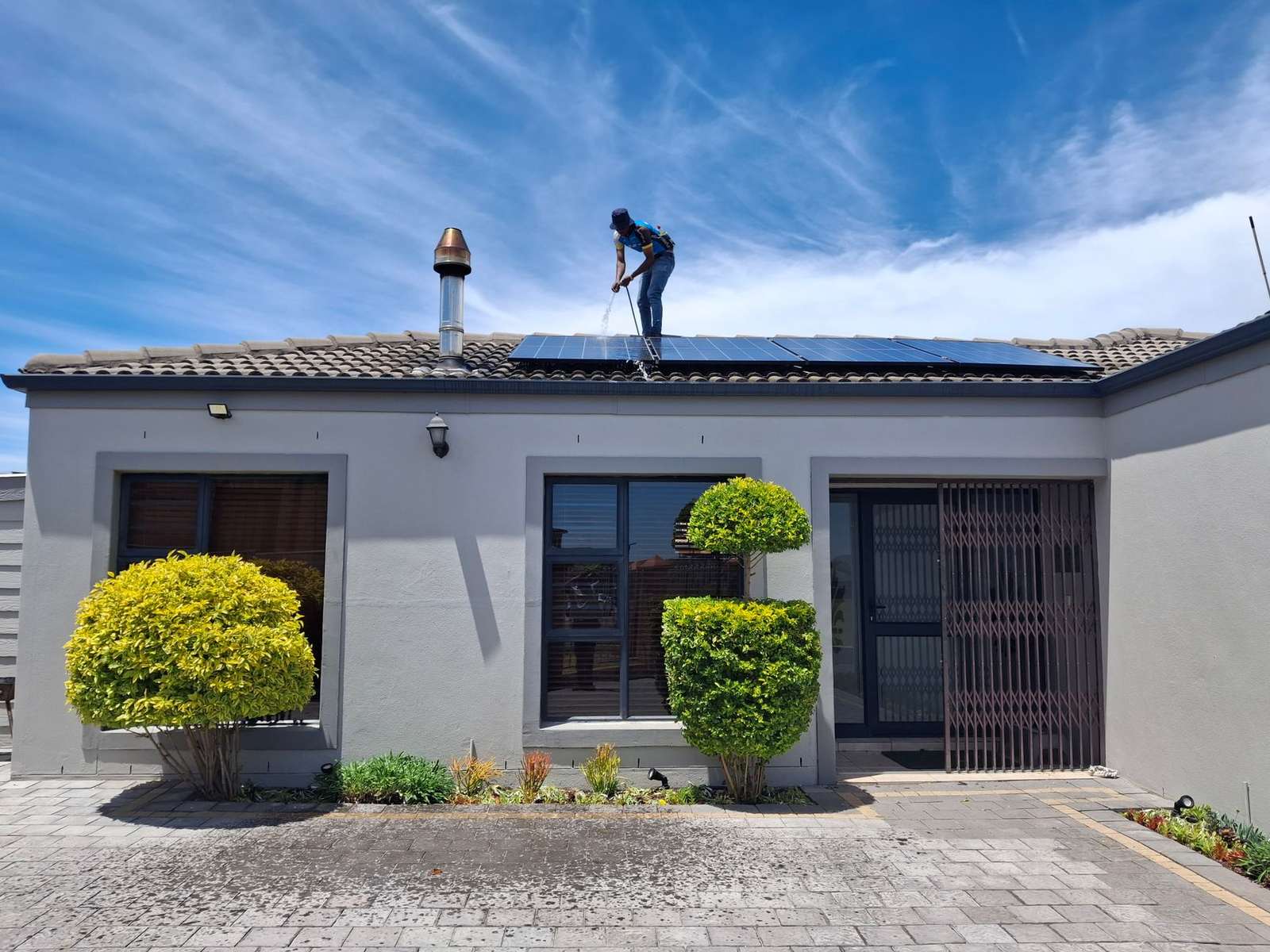
Solar preventive maintenance is the scheduled inspection, testing, cleaning and servicing of a photovoltaic plant, carried out before faults appear. It helps you catch losses early so equipment lasts as long as designed.
It is one part of the wider package described in the overview of solar O&M services. This page covers what a preventive plan contains, how often tasks recur and how to judge whether a plan is worth its cost.
| Task | Interval or approach |
|---|---|
| Annual hands-on inspection round | Integrity checks, heat-imaging survey and tightening connections, all yearly |
| Vegetation management | About quarterly |
| Weather-sensor calibration | Roughly two-yearly |
| Inverter filters and fans | Filters cleaned or replaced yearly; fans on a roughly five-year cycle |
| Panel cleaning | Driven by soiling measurement, not a fixed calendar |
These intervals come from the SgurrEnergy best practice guide; the information can change, so check the source for current guidance.
What a preventive maintenance plan contains
A preventive plan lists every recurring task on the plant, the interval for each, who performs it and what record it produces. The IEA PVPS guidelines state that the most important actions include periodic sampling of individual electrical measurements at module level, soiling and snow mitigation, site and vegetation management, and keeping balance of systems and SCADA monitoring systems operational, as set out in the report summary.
The same summary adds that preventive maintenance action plans that exclude redundant activities can bring costs down, and that the plan should optimise the overall plant and O&M budget depending on the plant’s size, design, complexity and environment. A plan copied unchanged from another site can therefore be both too long and too short: it may waste visits on checks the design makes unnecessary, and miss risks that are specific to the location.
An engineering guide from the consultancy SgurrEnergy describes how a preventive (scheduled) work programme follows an Annual Maintenance Plan, with downtime-inducing tasks done at night or in low irradiance. Planning work for the hours when the sun is low keeps the energy cost of a shutdown small.
Typical tasks and intervals
Intervals depend on the site, the equipment and the warranty terms, but indicative schedules are published. The SgurrEnergy guide states that a typical annual plan includes module integrity checks, thermography and connection tightening yearly, vegetation management about quarterly, weather-sensor calibration roughly two-yearly, and inverter filter cleaning or replacement yearly, with fans on a roughly five-year cycle, as set out in its best practice guide.
In practice the tasks group into a few families:
- Modules and structures: visual checks for cracks, discolouration and delamination, inspection of frames, clamps and fasteners, and thermal imaging to find hot cells and bypass diode faults.
- Electrical equipment: tightening and inspection of connections, combiner boxes, cabling and protection devices, plus string-level measurements that are compared across the plant.
- Inverters and transformers: cleaning or replacing filters, checking cooling fans, reviewing logs and verifying protection settings.
- Site and environment: vegetation control, drainage and fence checks, and removal of animal nests and debris.
- Instruments and data: calibration of irradiance and temperature sensors and verification that communication and data logging work.
Thermal imaging deserves a note. The US Federal Energy Management Program lists, among its steps for assessing a damaged system, that operators should undergo thermal, UV, or infrared imaging to identify hidden damage. The IEA PVPS summary describes aerial infrared and visual imagery as powerful tools for diagnosing faults, especially for power losses, and a yearly survey is common practice.
Cleaning and vegetation as preventive work
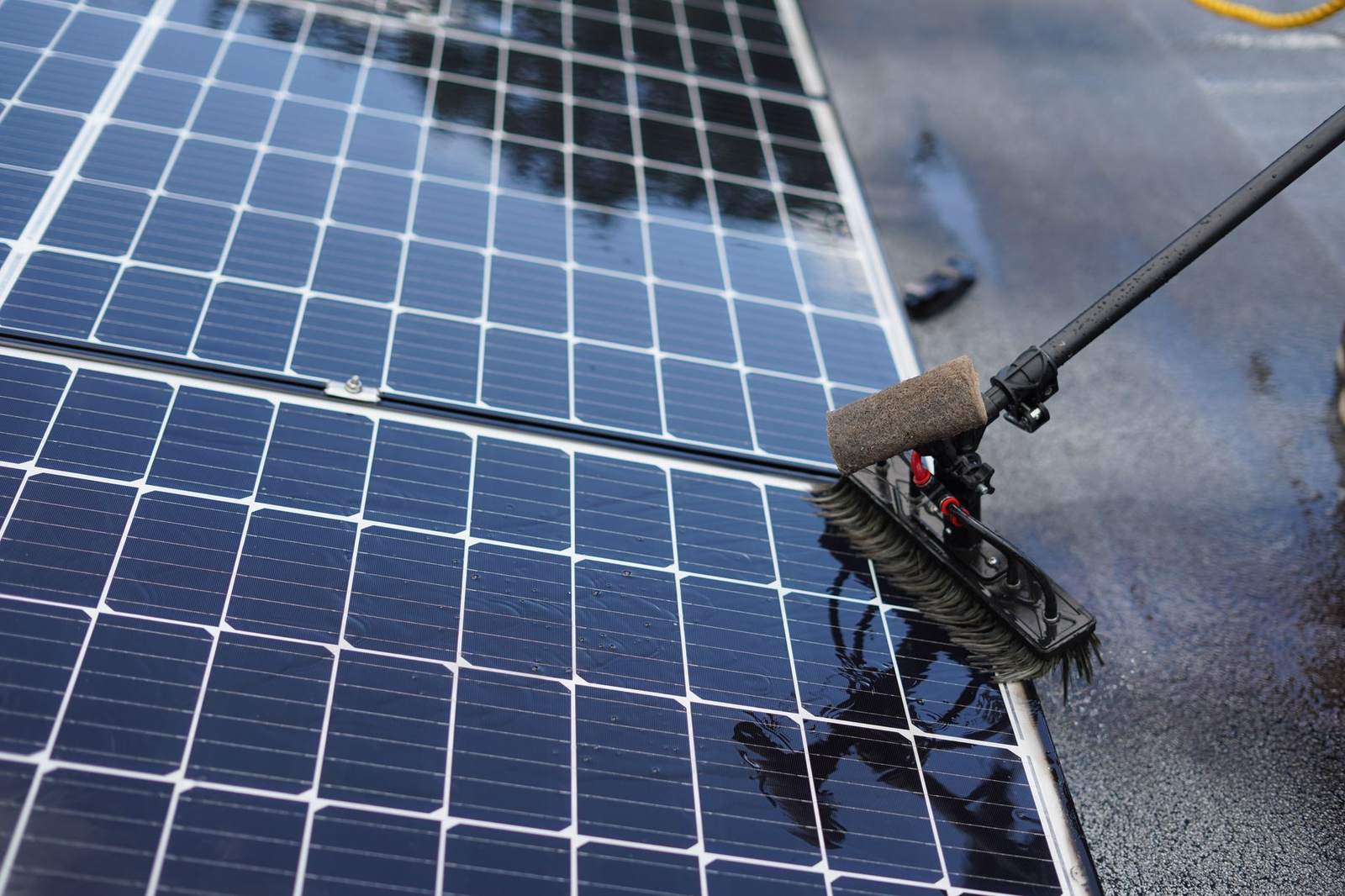
Cleaning is often the largest single preventive activity, and it is also the one most often done on a fixed calendar without evidence. The SgurrEnergy guide says that cleaning must comply with the module warranty and the relevant IEC standard, and should be driven by soiling measurement, using reference stations and laboratory swab analysis, rather than by a fixed calendar, so that spending is aimed where it recovers the most yield. The economics of that decision are discussed in the page on solar panel soiling losses.
Vegetation is the other recurring cost. Grass and shrubs shade modules, hide equipment and add fire risk, so cutting is scheduled around the growing season. For temperate climates, the IEA PVPS summary advises that grass cutting should be combined with an inspection of the status of the modules, to decide whether cleaning or corrective maintenance actions are required. Combining the two jobs saves a separate visit.
Site conditions can change the plan substantially. For flood-prone plants, the guidelines list actions that include switching off the plant in anticipation of flooding and only switching it back on after technical inspection. Written procedures for before and after severe weather therefore belong in the preventive plan, not in an emergency folder.
Preventive, corrective and predictive work in balance
Preventive work does not replace repairs. The SgurrEnergy guide treats the preventive-to-corrective work ratio as a measure of how a service is performing and gives a best practice of around 80/20 by technician hours. It also reports schedule attainment, the share of planned tasks completed on time, with a best practice above 90%. A contractor that completes few of its planned tasks is probably spending its time firefighting.
Predictive work adds a data layer. The IEA PVPS summary recommends predictive maintenance services with data collection devices on site to create an intelligent monitoring system. Instead of waiting for an alarm, the operator watches trends, such as a string that slowly loses current compared with its neighbours, and schedules an inspection before the loss grows. The data side is covered in the page on solar plant monitoring.
Who decides how much preventive work to buy is a question of governance. The owner or the asset manager sets the budget and the targets, while the contractor carries out the plan. The split of roles is explained in the page on solar asset management.
Records and review
A plan only works if it is followed and reviewed. Each task should produce a dated record: what was checked, what was found and what was done. Findings should flow into the corrective work queue, and recurring findings should change the plan. If a particular connector type keeps loosening, the interval for tightening it should shorten; if a check never finds anything across several years, it may be a candidate for removal, in line with the advice to exclude redundant activities.
Records also support warranty and insurance claims. A manufacturer or insurer will ask whether the plant was maintained as required, and a complete log is the simplest answer. For that reason, preventive maintenance is as much about documentation as about the physical work.
Safety shapes how preventive work is done. A plant is a live electrical installation, so inspections that involve opening combiner boxes, testing strings or working near inverters need trained staff, the right protective equipment and written procedures for isolating circuits. Working at height on racking, and working in heat on exposed sites, add further hazards. Scheduling visits for suitable weather and daylight, and recording who attended and what they checked, keeps the programme both safe and auditable.
Frequently asked questions
What is preventive maintenance in a solar plant?
Show answer
It is scheduled work such as inspections, tests, cleaning, vegetation control and component servicing, done to find and fix problems before they cause lost production.
How often should solar panels be inspected?
Show answer
It depends on the site and equipment. One published guide lists module integrity checks and thermography yearly, and vegetation management about quarterly.
Should cleaning follow a fixed calendar?
Show answer
Best practice is to drive cleaning by soiling measurement, so that spending goes where it recovers the most yield, while following the module warranty conditions.
Is preventive maintenance worth the cost?
Show answer
A plan that excludes redundant activities and targets the main loss causes can bring costs down, according to the IEA PVPS guidelines, while catching faults early limits lost energy.