Feed-in tariffs in Europe were government-set prices paid for renewable power fed into the grid. Most countries have since replaced them with market premiums and auctions.
The shift matters for anyone following solar energy in Europe, because the support design shapes how much capacity gets built and who carries price risk. This page covers how the schemes worked, what went wrong, and what took their place.
| Item | What it means |
|---|---|
| Electricity Feed-in Act | Entered into force on 1 January 1991 |
| Original German tariff term | Government-set for 20 years, depending on technology and project size |
| Who paid for the scheme | A surcharge on electricity consumers funded it |
| Photovoltaic cap | A hard cap on total photovoltaic capacity: 52 GW |
| Bidding from 2017 | From 1 January 2017, aid goes through competitive bidding |
| Small installations | Market-premium conditions do not apply below 500 kW |
Sources: German Renewable Energy Sources Act overview and EU state aid guidelines. Rules can change, so check the sources for the latest details.
What a feed-in tariff is
A feed-in tariff is a policy contract between a generator and the state or grid operator. The generator receives a guaranteed price, connection to the grid and priority for its output. The price is set in advance, often differing by technology and plant size, so that an investor can calculate the return before building.
The model started in Germany. According to the overview of the German Renewable Energy Sources Act, the Electricity Feed-in Act entered into force on 1 January 1991 and initiated the first green electricity feed-in tariff scheme in the world. The Renewable Energy Sources Act, known as the EEG, followed and first came into force on 1 April 2000.
How the German scheme worked
The German design became the template other European countries copied or adapted. The same source on the EEG describes a government-set feed-in tariff for 20 years, dependent on the technology and size of project, and says the scheme was funded by a surcharge on electricity consumers. Operators of solar plants therefore faced almost no market risk, while the cost of the support was spread across all electricity bills.
To keep costs under control, the law built in a falling price path. The overview notes annual degression rates varying between 1% for biomass and 5% for photovoltaics, so each year’s new plants received a lower tariff than the year before. The principle was that modules would get cheaper, and the tariff should follow them down. Readers interested in how this played out in the largest market can read the page on solar energy in Germany.
Why fixed prices became a problem
The weakness of a fixed tariff is that it does not respond to the market. When equipment costs fall faster than the tariff, installation booms and the total bill for consumers rises. Germany tried to manage this with a cap. The EEG overview records that a hard cap on total photovoltaic capacity was introduced, set at 52 GW.
The same text describes the point at which solar no longer needed such generous support: the feed-in tariff for roof systems at 19.5 ¢/kWh was now lower than the average electricity price for households at 23 ¢/kWh. Once self-generated power was cheaper than grid power, the tariff stopped being the main reason to install panels, and the argument for fixed, government-set prices weakened.
How EU state aid rules pushed the change
Support for renewable power counts as state aid, so the European Commission sets the framework national schemes must follow. The Commission’s guidelines on state aid for environmental protection and energy, published in the Official Journal of the European Union, required that from 1 January 2016 new schemes grant aid as a premium in addition to the market price, with generators selling their electricity directly in the market.
The same guidelines go further for later projects. From 1 January 2017, aid has to be granted in a competitive bidding process on the basis of clear, transparent and non-discriminatory criteria, with defined exceptions. Together the two rules ended the classic model of a fixed price offered to everyone who applied.
Small plants were treated differently. The guidelines state that the market-premium conditions do not apply to installations with an installed electricity capacity of less than 500 kW, which is why small rooftop systems kept simpler support in several countries.
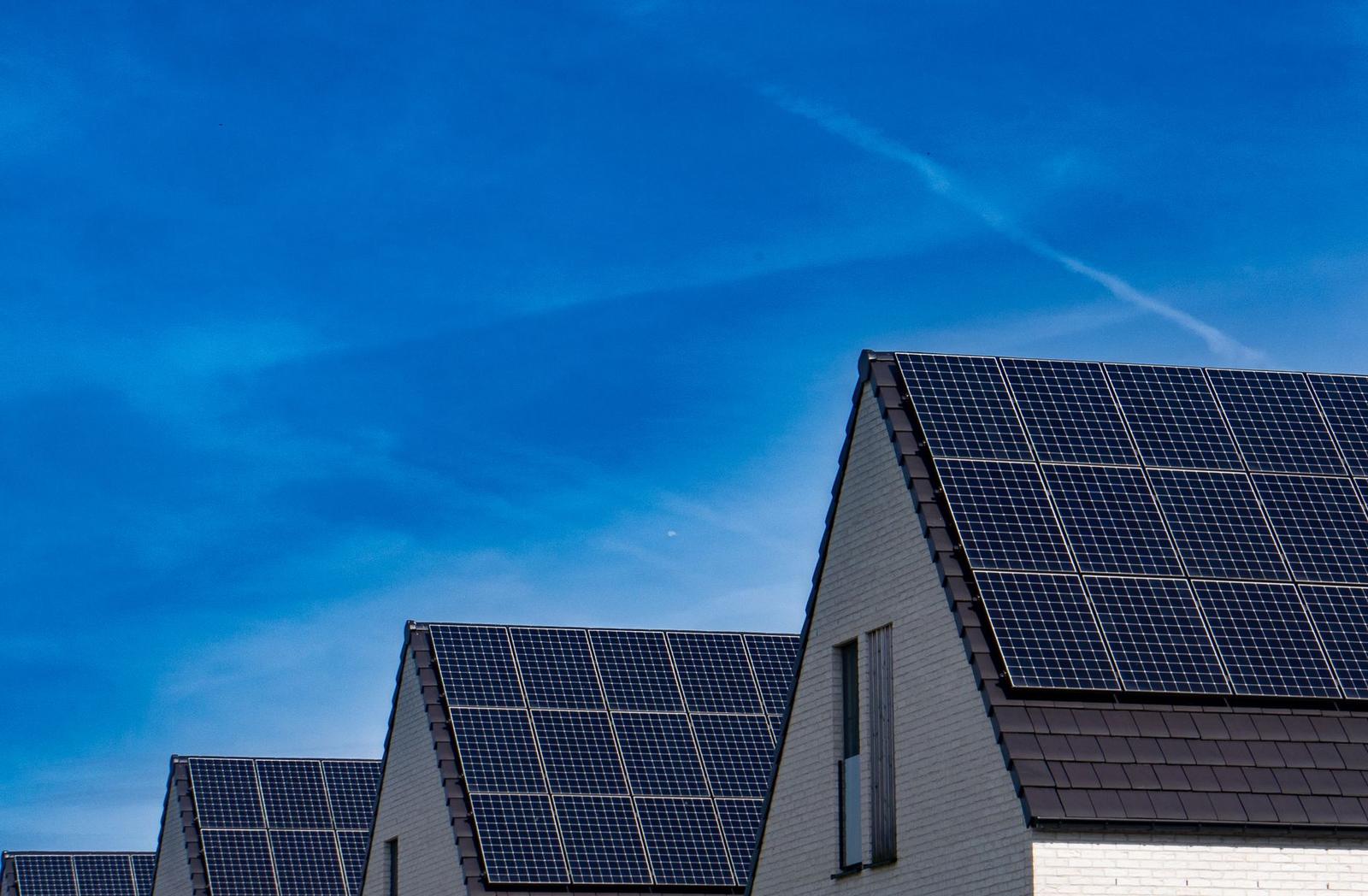
The wider lesson was about timing. A tariff that is generous when a technology is expensive can become excessive once costs fall, and adjusting it after the fact is politically hard because investors have already relied on the promised price. Premiums and auctions reduce that mismatch because the price is revisited with every round of bidding.
What replaced feed-in tariffs
Two mechanisms took over: the market premium and the auction. Under a market premium, producers sell power themselves and receive an extra payment on top. In Germany, the EEG overview explains that plant operators market their production directly and receive a market premium to make up the difference between their bid price and the average monthly spot market price for electricity.
Under an auction, competition sets the price instead of a regulator. The same source says that the funding rates are no longer set by the government, but are determined by auction, a change that the EEG 2014 law began for most renewable sources. The result is that investors now carry market and balancing risk, and developers compete on price, which usually pushes support levels down.
What the current EU framework says
The recast Renewable Energy Directive confirms this direction. Its official text says Member States should allocate support in addition to market revenues and introduce market-based systems to determine the necessary level of support. It also keeps room for smaller projects, stating that Member States should be allowed to grant exemptions from tendering procedures and direct marketing to small-scale installations and demonstration projects.
In practice, large solar parks are built through tenders, while households and small businesses often rely on simpler schemes that pay for surplus power fed into the grid. How the Commission frames rooftop deployment is covered in the page on the EU solar strategy.
Another practical effect concerns grid operators and traders. With a fixed tariff, the producer had no reason to care when the power was generated, because the payment was the same in every hour. With a premium on top of the market price, generators have a reason to follow price signals, forecast their output and avoid producing when prices are negative. This is part of the market integration that the directive describes, and it is why modern solar parks are paired with forecasting, balancing services and, increasingly, storage.
Lessons from the feed-in tariff era
The tariffs achieved their main goal of making investment in solar and wind predictable at a time when the technologies were expensive. They also showed the cost of setting prices administratively: rapid cost declines, caps, consumer surcharges and repeated legal changes. The move to premiums and auctions keeps long-term revenue support while letting the market discover the price.
For project owners and operators, the main consequence is exposure to wholesale prices, balancing responsibility and curtailment, topics that fixed tariffs had hidden.
Frequently asked questions
What is a feed-in tariff?
Show answer
It is a guaranteed, government-set payment for renewable electricity fed into the grid, normally paid over a fixed number of years and differing by technology and plant size.
Which country introduced the first feed-in tariff scheme?
Show answer
Germany. Its Electricity Feed-in Act, in force from 1 January 1991, is described as the first green electricity feed-in tariff scheme in the world, as the EEG overview notes.
Do feed-in tariffs still exist in Europe?
Show answer
Fixed tariffs have largely given way to market premiums and auctions for larger plants. Small installations can still receive simpler support, since EU rules allow exemptions for small-scale projects.
Why did the EU require auctions?
Show answer
The Commission’s state aid guidelines require competitive bidding from 1 January 2017, as set out in the state aid guidelines, so that the level of support is set transparently by competition rather than by a regulator.