Solar energy in Austria now supplies a large share of power, with around 11 GW (DC) installed at the end of 2025, contributing around 13% of the national electricity supply. A sharp slowdown followed in 2025.
This page covers Austria’s installed capacity, the 2025 slowdown, the support schemes in the Renewable Energy Expansion Act, and the grid rules that now shape new systems. For the wider picture across countries, see the overview of solar energy in europe.
| Key fact | Detail |
|---|---|
| Small PV system tax policy | Government ended exemption early, reducing residential installations |
| Cumulative capacity and supply share end 2025 | Around 11 GW (DC); around 13% of supply |
| Renewable share of electricity 2025 | About 85% |
| Flexible grid access | New law creates a legal framework for flexible connection |
| Dynamic tariffs | Suppliers must offer contracts with dynamic energy prices |
| Grid injection fee | Reduced to sizes beyond typical residential PV systems |
Figures from iea-pvps.org; they can change, so check the source before you rely on them.
Capacity and generation
Austria’s national survey report for the International Energy Agency’s photovoltaic programme describes 2024 as a record year. The country was adding 2.51 GW of new capacity and bringing cumulative installations to 9.4 GW (DC). In that year, PV generation reached approximately 7.7 TWh, meeting around 11.4% of national electricity consumption.
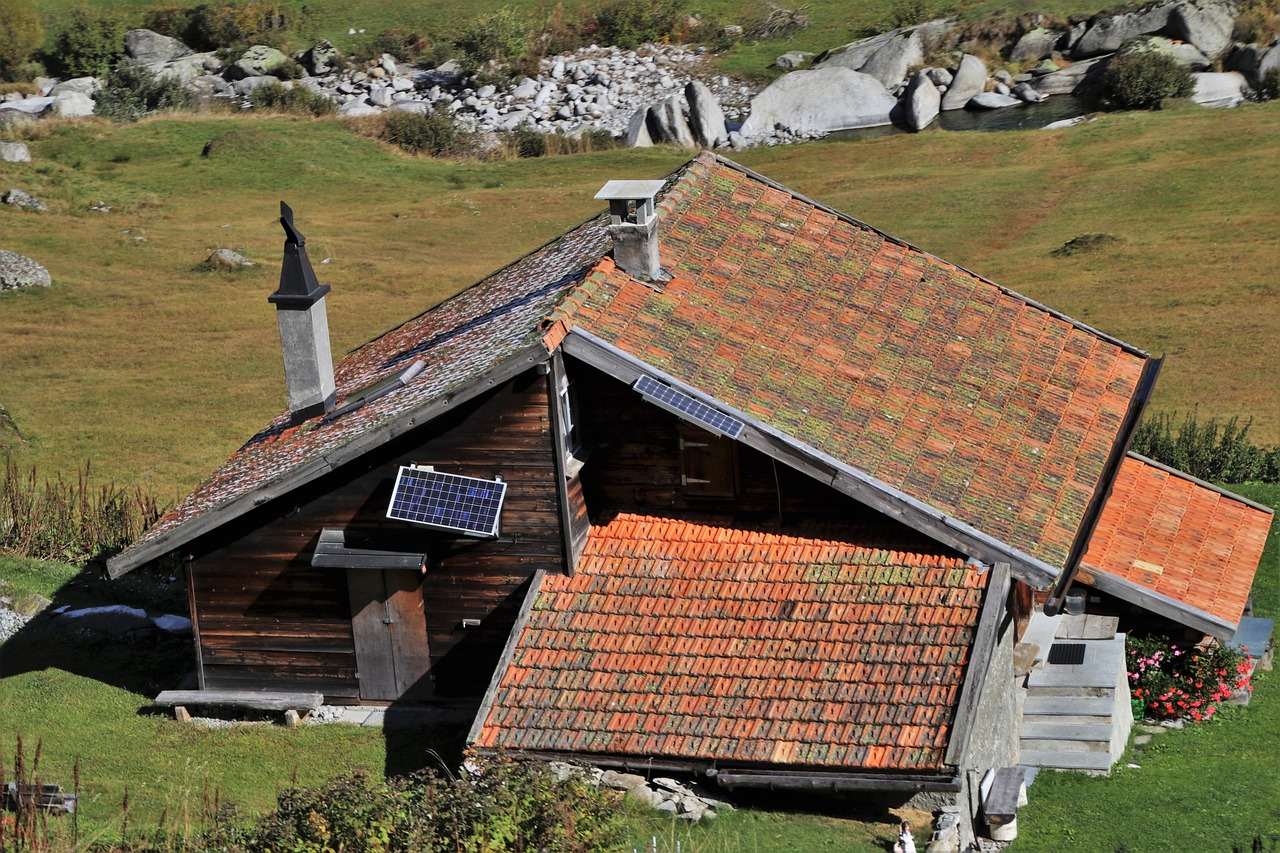
The fleet is dominated by small systems. The same report notes that around 500,000 PV systems were operational nationwide by the end of 2024, which reflects the popularity of rooftop installations on homes, farms and businesses. Large ground-mounted plants exist, but they are a minority of annual additions: decentralised systems accounted for 2,183 MW of new capacity, while 326 MW came from centralised ground-mounted plants.
That split matters for how the market behaves. A market built on household rooftops responds quickly to changes in electricity prices, subsidy rules and taxes, because each buyer makes an individual decision. A market built on utility-scale plants responds instead to tender calendars, grid connection offers and financing conditions. Austria has more of the first than the second, and the 2025 results show the consequences.
Capacity figures also depend on the basis used. The IEA programme reports Austria in direct-current terms, while other bodies, while other sources may use alternating-current figures, so two credible numbers for the same year can differ without either being wrong.
The 2025 slowdown
The 2025 country update describes the change plainly: after two years of annual installation rates well above 2.5 GW (DC), PV expansion in Austria slowed significantly in 2025, with around 1.8 GW (DC) connected to the grid. The sector association Photovoltaic Austria tracked the decline during the year. It reported that between January and September 2025 the market expanded by 1.03 GW, with quarterly additions that were only 367 MW in the first quarter, 364 MW in the second and 305 MW in the third.
The association measured this against a national benchmark. It warned that the country was likely to miss its annual target of 2 GW, and its managing director called the figures alarming.
The explanation given in the IEA programme update centres on policy. It cites the new government’s premature decision to end the VAT exemption for small PV systems, leading to declining residential installations. The association also points to unclear funding conditions and uncertainty over a possible charge for feed-in. Residential systems were the segment most affected, while large plant builders stayed active, which fits the market structure described above.
A slowdown in additions does not mean a shrinking fleet. Existing systems keep generating, and the total continued to rise. Looking ahead, the national survey report states that annual additions of 1.6–2 GW are expected over the coming years, so most observers treat the slowdown as a pause rather than a collapse.
The Renewable Energy Expansion Act
The core of Austrian renewable policy is the Renewable Energy Expansion Act, known by its German abbreviation EAG. A legislative summary records its goal that annual renewable electricity generation is to be increased by 27 TWh by 2030 with a 2020 baseline. The same summary spells out how that increase is divided: 11 TWh shall come from PV, 10 TWh from wind, 5 TWh from hydro, and 1 TWh from biomass. Solar is therefore the largest single contributor to the planned growth, narrowly ahead of wind.
The solar share was designed around rooftops. According to the summary, the PV contribution shall rely on a programme to install panels on 1 million rooftops. This rooftop focus is a political choice as much as a technical one: it spreads investment across many households and keeps new generation close to consumption.
The wider goal is stated in the IEA policies database, which says that the reform supports the targets of covering 100 % of Austria’s total electricity consumption (nationally balanced) from renewable energy sources by 2030 and achieving climate neutrality by 2040. The words nationally balanced are important: they mean that over a year, domestic renewable generation matches domestic consumption, not that every hour is covered by renewables. The database adds that a total of one billion euros will be invested annually in the expansion of renewables by 2030 through market premiums and investment grants.
Austria starts from a strong position on this measure. The country update notes that the share of renewable electricity production in Austria is quite high, with about 85% in 2025, thanks to long-standing hydropower and wind expansion over recent decades. It also says the year showed a decline compared with the previous one, mainly because of lower hydro and wind availability. That weather dependence is one reason solar is valued as a complement: its output peaks in the summer months, while Alpine hydropower and winter wind fill other parts of the year.
How support works: grants, premiums and tenders
The EAG relies on two basic tools, investment grants and operating premiums. The national survey report summarises the split by size: investment subsidies for systems up to 1 MWp and storage up to 50 kWh, and market premiums for larger systems awarded through competitive tenders. Small owners therefore receive a one-off contribution to the purchase cost, while large plant operators bid for a premium on top of the market price.
The same report notes that innovative applications are favoured. Building-integrated PV, agricultural PV and floating PV receive a 30% funding bonus. The design choice reflects a land-use concern: using roofs, facades, farmland combined with generation and water surfaces limits conflicts over open ground.
Federal support is supplemented at regional level. The country update says that photovoltaic systems are also supported with subsidies in most of the federal states, always with slightly different priorities. For an owner, this means the effective support depends on location as well as on national rules. Austria’s grants and premiums differ from the older fixed feed-in payments used elsewhere in Europe. Neighbouring markets take their own routes, as the page on solar energy in france shows.
Prices help explain why grants rather than very high tariffs are enough. The national survey report gives average turnkey prices of €1,551/kWp for residential rooftop systems, €1,000/kWp for small commercial installations, and €500–650/kWp for large utility-scale plants. The gap between small and large systems shows the economies of scale, and it is why tenders target the larger projects while grants cover the small ones.
Storage, communities and the new grid rules
Batteries are becoming a normal part of Austrian systems. The survey report finds that approximately one-third of new decentralised systems included battery storage, with typical capacities around 14 kWh. Storage raises self-consumption and reduces the amount of midday power pushed onto the local grid.
Sharing electricity is the other growth area. The same report states that Austria’s energy community framework gained momentum, with more than 6,000 communities operational by mid-2025. These communities let neighbours, businesses and local authorities share generation across the public grid.
Late in 2025, Parliament passed a new Electricity Act that changes the rules for new plants. According to the IEA programme update, new PV systems above a certain capacity (e.g. above 3.68 kWp) must be technically designed in such a way that grid operators can remotely control them. This control is a response to the same pressure seen in other solar-rich markets, where midday surpluses create congestion; the issue is explained further in the page on solar energy in germany.
The act also adds flexibility on the connection side. The update notes that the new law creates a legal framework for flexible grid connection, which allows systems to connect before the full grid capacity is available, and that electricity suppliers are required to offer contracts with dynamic energy prices. Dynamic prices give owners a reason to shift consumption towards sunny hours. On the controversial charge for feeding in, the update says that a widely discussed new grid-injection fee for electricity generation was finally reduced to system sizes beyond typical residential PV-systems, so typical home systems were spared.
Together these measures mark a change in emphasis. The first phase of Austrian solar growth focused on getting panels onto roofs. The next phase focuses on system integration: remote control, flexible connections, dynamic tariffs and storage. Plant monitoring and forecasting become more important as output has to follow grid conditions.
Outlook for Austrian solar
The national targets remain demanding, and the recent slowdown shows how sensitive a rooftop-led market is to policy signals. The country update concludes that PV is increasingly becoming a central component of the energy transition in Austria but faces challenges in terms of stable political framework conditions and targets. The industry’s stated need is predictability.
The national survey report expects annual additions of 1.6–2 GW to continue. If additions return towards the upper end of that range, the cumulative fleet would keep growing, and solar’s share of consumption would rise from the current level. If instead the market stays at the recent pace, the rooftop programme behind the EAG would fall behind its plan. For a country with a high renewable share already, the remaining task is not simply more generation but better timing, storage and grid use, which is why the new Electricity Act may matter as much for solar as the original expansion law.
Frequently asked questions
How much solar capacity does Austria have?
Show answer
The IEA photovoltaic programme reports that a total of around 11 GW (DC) was installed in Austria at the end of 2025, which contributes around 13% of the national electricity supply.
Why did Austrian solar installations fall in 2025?
Show answer
The programme update attributes the fall to the premature decision to end the VAT exemption for small PV systems, which reduced residential installations, while larger plant builders stayed active.
What is Austria’s solar target under the EAG?
Show answer
The Act foresees that 11 TWh shall come from PV as part of an increase of 27 TWh in annual renewable generation by 2030.
What support exists for small solar systems?
Show answer
For small systems the national survey report describes investment subsidies for systems up to 1 MWp and storage up to 50 kWh, with most federal states offering additional grants.
Do new Austrian PV systems have to be remotely controllable?
Show answer
Yes, above a size threshold of 3.68 kWp, according to the IEA programme update.